
Innovation does not always require developing new technologies from scratch. Sometimes, the key is discovering what already exists and bringing the right people together. This is exactly what happened within the Interreg North-West Europe project ReNu2Cycle in Luxembourg.
How continuous communication and collaboration within ReNu2Cycle connected an existing Luxembourg wastewater treatment technology with agricultural field trials — turning a technical solution into an opportunity for circular nutrient use.
As part of the project, ReNu2Cycle project partners Eco:novis (in Luxemburg) was looking for suitable sources of recovered fertilisers, particularly struvite, to carry out agricultural field demonstrations. Finding a local producer was especially important to demonstrate how regional nutrient recovery could contribute to a more circular agricultural system.
Through continuous communication with stakeholders, including public authorities, ministries, wastewater-sector representatives and agricultural organisations, the project team actively shared its plans and explored potential cooperation opportunities. These efforts eventually led to an unexpected connection with Wagner-Schaffner, a Luxembourg engineering company that had already developed wastewater treatment technology and gained practical experience in recovering struvite.
During the initial discussions in spring 2025, the company's managing director, André de Marie, presented earlier struvite samples and explained the underlying recovery process. Although the technology had originally been developed for wastewater treatment rather than fertiliser production, its potential agricultural application became an interesting opportunity for both sides.
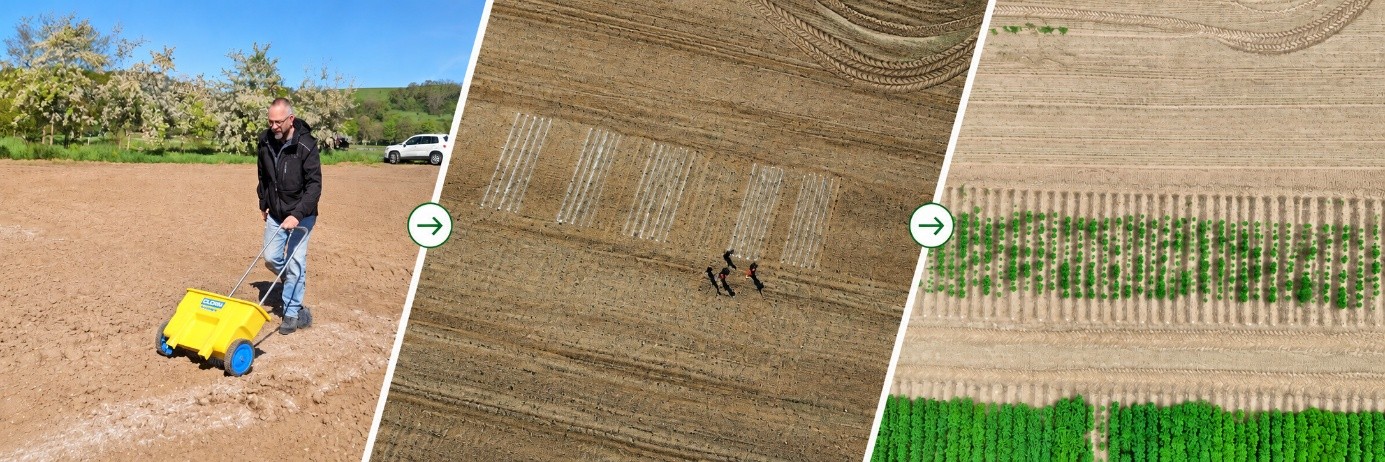
The discussions resulted in a concrete collaboration: Wagner-Schaffner independently produced approximately 100 kg of fresh struvite for ReNu2Cycle, enabling the project to demonstrate locally recovered nutrients under agricultural conditions.
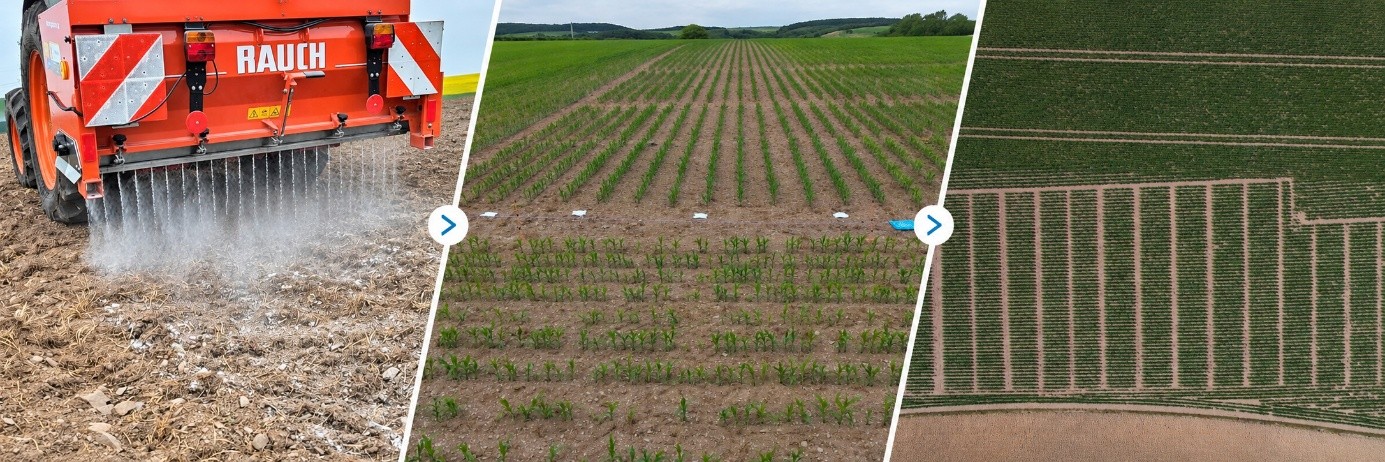
In 2026, the material was used in silage maize field trials in cooperation with Luxembourg's Administration des services techniques de l'agriculture (ASTA) and in potato micro-plot trials conducted with the Lycée Technique Agricole (LTA)T.
What began as stakeholder outreach had developed into practical cooperation between the wastewater and agricultural sectors.
Wagner-Schaffner: From wastewater treatment to circular nutrient recovery
The story also highlights the innovation potential of an established Luxembourg company. Wagner-Schaffner is a family-owned engineering business with more than 70 years of experience. Originally specialising in heating installations, the company progressively expanded into ventilation, cooling, district heating, biogas and biomass technologies, and eventually wastewater treatment.
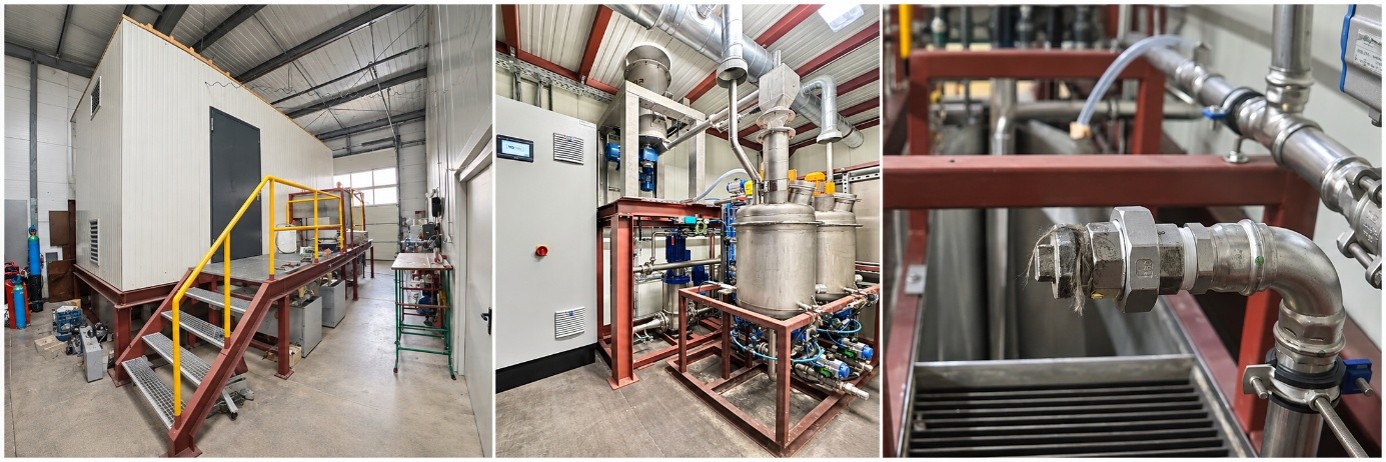
According to André de Marie, the company's involvement in environmental technology grew from practical engineering challenges. Early projects involving the treatment of digestate and industrial wastewater encouraged the development and testing of new technical approaches. One important challenge was the removal of phosphorus and reduction of ammonium concentrations in wastewater. Building on previous research and experiments, Wagner-Schaffner developed its own treatment technology involving chemical precipitation.
The process, patented in Luxembourg, offers an opportunity not only to improve wastewater treatment but also to recover valuable nutrients.
Under suitable conditions, phosphorus and ammonium can be incorporated into struvite, a mineral consisting of magnesium, ammonium and phosphate. These components are valuable plant nutrients, making struvite a potential alternative phosphorus fertiliser.
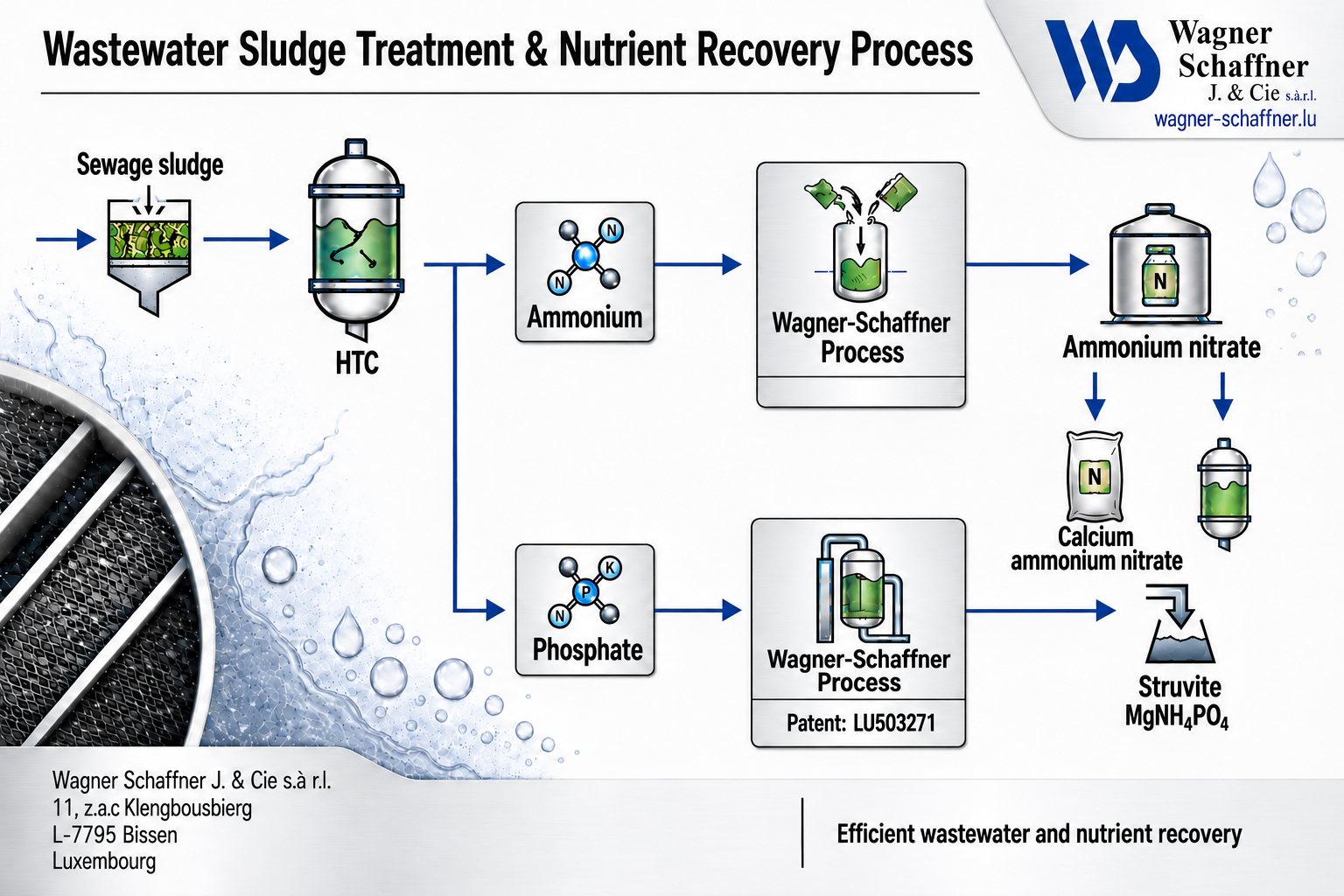
This creates an important link between environmental protection and the circular economy: substances that wastewater treatment plants need to remove can potentially be transformed into resources for agricultural production. As André de Marie explained during the ReNu2Cycle interview, the original objective was to improve wastewater quality by addressing phosphorus and ammonium concentrations. The possibility of obtaining a usable product creates an additional benefit. Wagner-Schaffner is also exploring further research opportunities for recovering nitrogen compounds from wastewater, including the potential production of ammonium-based fertilisers.
While these developments remain at different experimental stages, they demonstrate how wastewater treatment technologies could contribute to closing regional nutrient cycles.
Eco:novis: Connecting expertise, supporting field activities and communicating results
The collaboration did not end with the production of struvite. Within ReNu2Cycle, Eco:novis helped connect Wagner-Schaffner's technical expertise with agricultural institutions, researchers, farmers and public authorities. Working closely with ASTA and LTA, Eco:novis coordinated the agricultural demonstration activities and facilitated exchanges between the technology developer and the participating organisations.
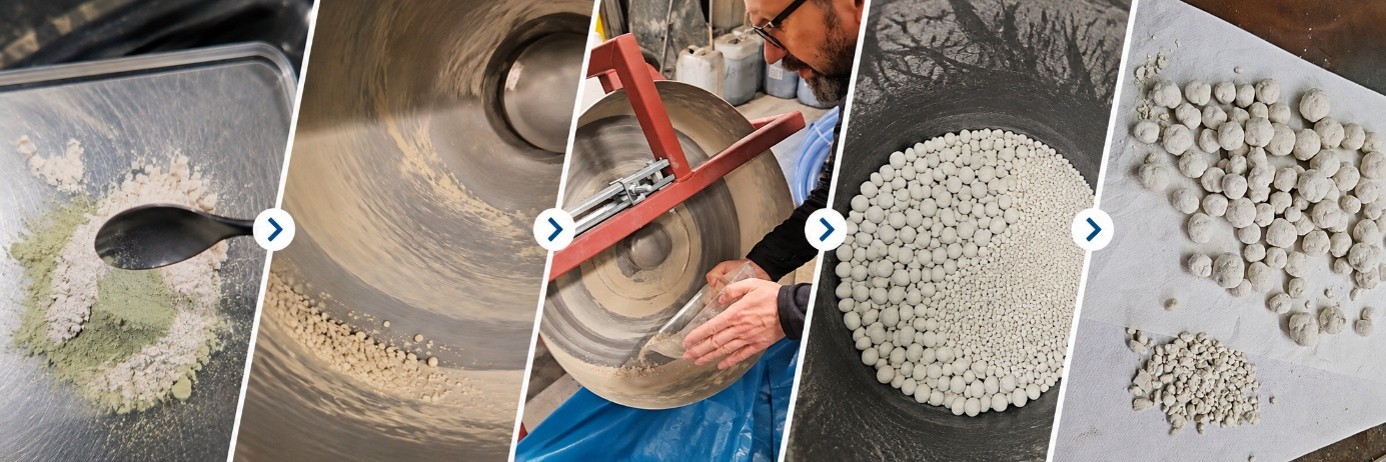
The cooperation also involved practical challenges. The recovered struvite was initially available as a fine powder, which raised questions about its suitability for conventional fertiliser application. Eco:novis therefore provided hands-on support during experimental drying and granulation activities at Wagner-Schaffner, including initial trials using binding materials. Although these first granulation attempts did not produce the desired results, they offered valuable practical experience.
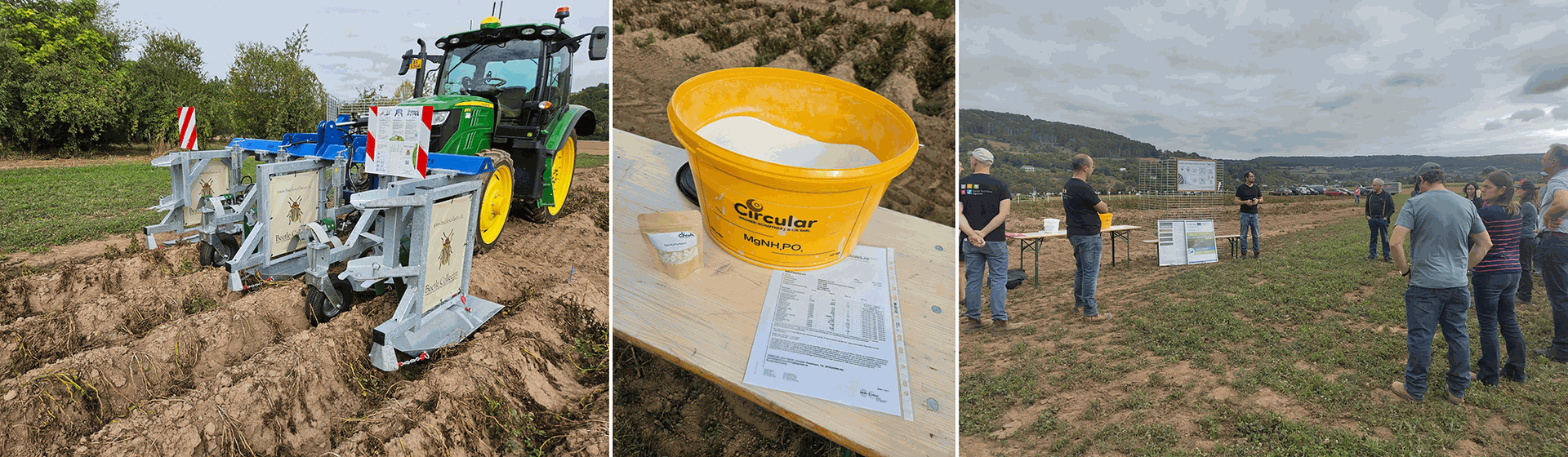
Rather than stopping the demonstrations, the partners proceeded with the powdered material. Its application in the field showed that granulation may not be necessary in every situation, although further testing is needed to determine suitable application methods.
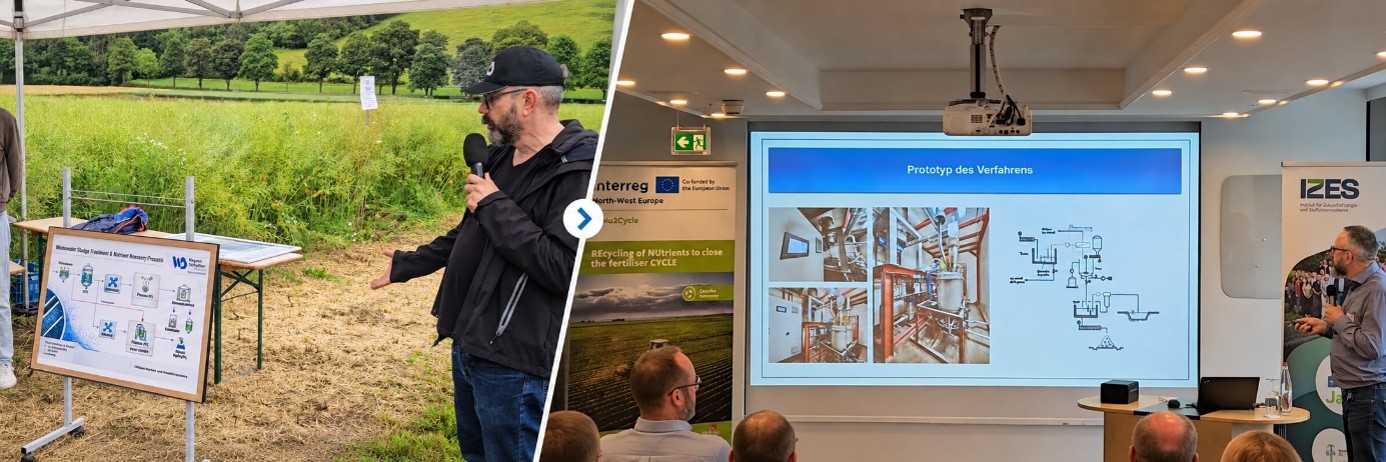
Equally important was the continuous communication of these activities to a wider audience. At the ReNu2Cycle stakeholder event in September 2025, Wagner-Schaffner was invited to present its technology and discuss nutrient recovery with representatives from agriculture, wastewater management, industry and public institutions. During the LTA field trial open day in June 2026, Eco:novis also involved André de Marie in presenting the origin and recovery process of the struvite used in the demonstrations.
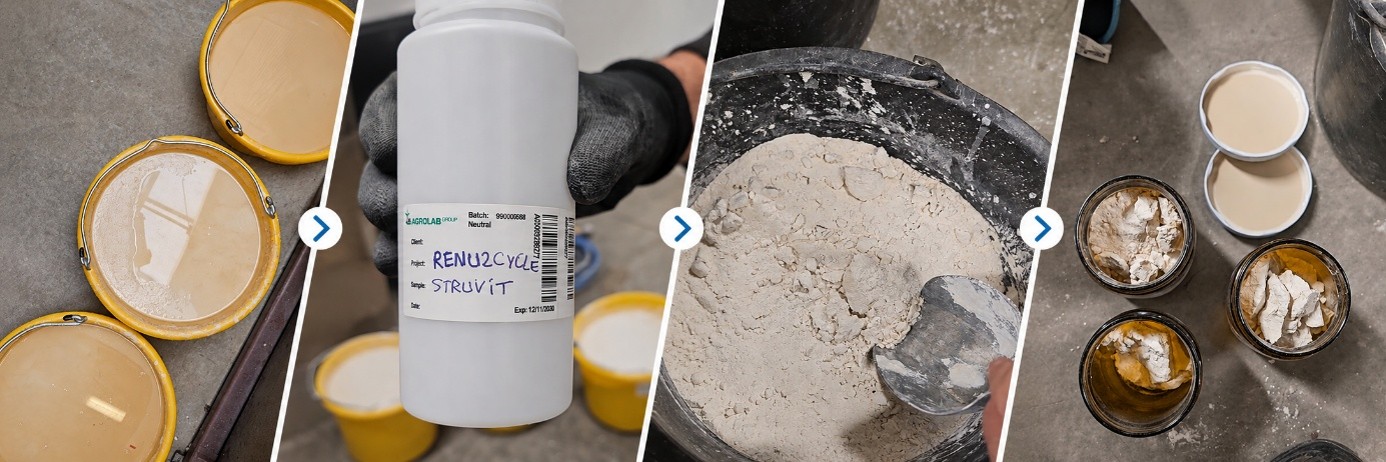
Further field visits, technical discussions and Living Lab activities created opportunities for farmers, researchers and technology developers to exchange knowledge, raise practical questions and identify possible solutions.Through these activities, Eco:novis contributed not only to coordinating the field demonstrations but also to making an existing technology visible to new potential users and encouraging
A success story with opportunities for the future
The cooperation between Wagner-Schaffner and ReNu2Cycle demonstrates the importance of stakeholder engagement as a driver of innovation. The most significant achievement is not yet a commercially established fertiliser product only. Instead, it is the successful connection of existing technical knowledge with a new application, supported by cooperation between industry, agriculture and public institutions.
Important questions remain regarding product preparation, nutrient recovery efficiency, economic feasibility, regulatory requirements and agricultural performance. Further investigations will help determine the potential for wider application. Nevertheless, the production and field demonstration of approximately 100 kg of locally produced struvite represents a tangible first step.
The central lesson is clear: effective stakeholder engagement is more than communication about a project. It can reveal previously overlooked opportunities, connect complementary expertise and turn existing technologies into practical solutions for a circular economy.
The Wagner-Schaffner and ReNu2Cycle collaboration illustrates how valuable progress can emerge when organisations look beyond their own sectors and work together towards a shared objective.
Want to know more?
Click the button to get in touch with Wagner Schaffner